
Add Row
Add Element
Chambers First Class Connetions KC
update
Jet Centers USA -
Learn to Fly Schools
Where Jet Setter's Stay and Play
cropper
update
Add Element
  • HOME
  • Categories
    • Restaurants
    • Jets Charter Private
    • Fitness
    • Flight Training Centers
    • Jet Centers & FBO
    • Aircraft & Automobiles
    • Outdoor Fun
    • Hotels & Resorts
    • Extra Travel News
    • Featured
    • Catering
    • Restaurants Vegan
    • Toys For Boys
    • OJC Airport - Corporate Gold Directory
    • Business Directory Johnson County
    • Airport Sponsers
    • EAA
    • Ultralights
    • FXE Fort Lauderdale Business Directory
    • EAA AirVenture
Add Element
  • update
  • update
  • update
  • update
  • update
  • update
  • update
September 20.2025
2 Minutes Read

Discover Ardbeg House: A Whimsical Retreat for Whisky Lovers

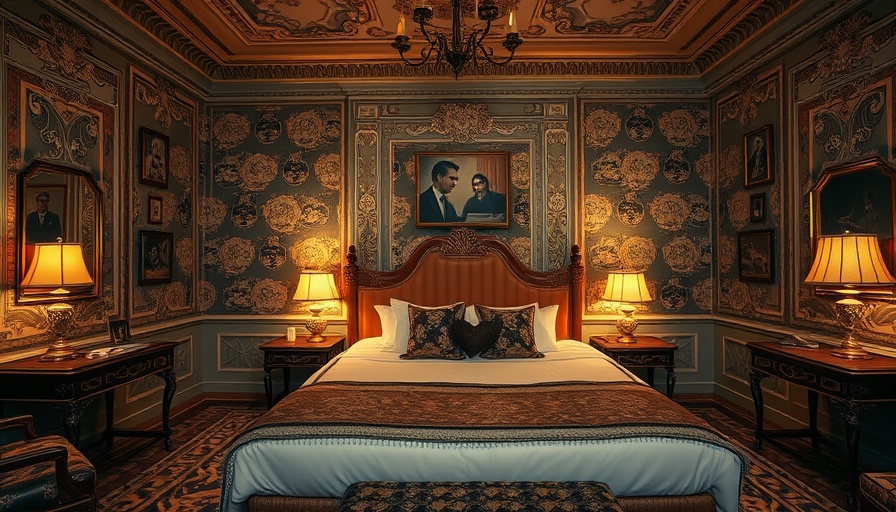
Ardbeg House Hotel Experience: Luxurious vintage-style room with warm lighting.

Welcome to Ardbeg House: A New Era for Whisky Lovers

Ardbeg, the iconic single-malt whisky maker known for its peaty concoctions, has recently unveiled a whimsical addition to its brand: the Ardbeg House hotel nestled in the heart of Port Ellen, Islay. This boutique hotel is not just a place to sleep; it's a unique experience designed for whisky enthusiasts and those looking to immerse themselves in the enchanting world of Ardbeg.

A Maximalist Retreat with Stories to Tell

Each of the hotel's 12 guest rooms is a perfect fusion of creativity and comfort, filled with richly woven stories reflecting both the history of Islay and Ardbeg’s heritage. For instance, the Rebel Suite pays homage to Islay’s maritime rebellions, featuring nautical themes and bold, adventurous decor. In contrast, the Monster Room boasts a chandelier seemingly sprouting from the ceiling, with dramatic vines wrapping around a massive bed—truly a whimsical encounter that invites guests to explore its every nook and cranny.

Special Dining and Bar Experiences Await

Guests are in for a culinary treat at the Signature Restaurant, where the menu is infused with an Islay twist—imagine indulging in dishes made from local scallops and lamb, artfully prepared for an unforgettable dining experience. The Islay Bar, on the other hand, becomes a gathering hotspot at 6:15 p.m. daily, featuring exclusive whisky tastings that showcase spirits only available at the distillery, enhancing the engaging experience for guests.

More Than Just a Hotel: A Full Immersion into Whisky Culture

What truly sets Ardbeg House apart is its offer of special perks, including private distillery tours and outdoor explorations of the stunning Islay landscape. Caspar MacRae, president and CEO of Ardbeg, emphasizes the hotel’s aim to integrate guests into the rich spirit and cultural tapestry of Islay, ensuring a memorable stay that fosters a lifelong admiration for Ardbeg.

Why Ardbeg House Stands Out

This new venture not only marks a bold expansion into hospitality but also signifies a significant moment for whisky tourism on Islay. By creating a whimsical environment that marries luxurious accommodations with immersive experiences, Ardbeg House caters to both loyal fans of their whisky as well as newcomers exploring this classic spirit for the first time. It’s a reflection of how the modern distillery is evolving to meet the desires of a diverse clientele looking for both luxury and authenticity.

As Ardbeg continues to push the boundaries of what it means to be a whisky institution, the introduction of Ardbeg House offers an exciting glimpse into the future of whisky tourism—where as much emphasis is placed on the experience as it is on the product itself. So, whether you’re a die-hard fan or just beginning to appreciate the complexities of whisky, Ardbeg House awaits to share its story with you.

Jet Centers & FBO

0 Comments

Write A Comment

*
*
Related Posts All Posts

Exploring the Handbag Market Divide: Why Premium Is Winning in China’s Luxury Scene

Update The Handbag Market: A New Wave in China The luxury handbag market in China is undergoing a significant transformation, marked by a notable polarization in consumer preferences. While high-end handbags maintain a robust appeal, aspirational brands are struggling to regain their footing. The demand for premium brands is surging, largely fueled by a shift in consumer values and economic factors influencing purchasing decisions. Understanding Value in Today’s Market As the dynamics of luxury consumption shift, unfamiliar terrain lays bare two distinct consumer paths. Many consumers, facing economic uncertainty, gravitate towards premium products that offer greater perceived value without steep price tags. This trend is highlighted by their increased awareness of the intrinsic value of luxury products, leading many to prioritize brands recognized for their craftsmanship and association with exclusivity. On the other hand, the allure of absolute luxury remains steadfast among affluent customers. Brands such as Hermès and Gucci are adapting to changes with strategic repositioning, focusing on brand storytelling and personalized services that resonate with this exclusive clientele. Challenges: Overseas Spending and Resale Markets One major hurdle for luxury brands is the increasing trend of overseas spending. Although recent statistics show that 44% of Chinese luxury consumption occurs abroad, brands must counteract this leakage by enhancing local experiences and embracing e-commerce solutions. Moreover, the booming grey-market segment complicates the scenario, as customers opt for more accessible options due to the lower prices of second-hand luxury goods. The Future of Premium Handbags An optimistic outlook for premium brands suggests they will thrive, especially those capable of tapping into the growing demand for authentic storytelling and emotional connection with consumers. Furthermore, as the Chinese market continues to evolve, it remains crucial for brands to innovate and adapt, balancing quality with sustainability to retain a competitive edge. This growing divide in the market not only reveals new consumer habits but serves as a significant indicator of broader socio-economic trends, challenging luxury houses to rethink their strategies for engagement. By recognizing the importance of perceived value, brand identity, and consumer education, stakeholders in the luxury handbag sector can navigate this intricate landscape and foster brand loyalty, ensuring their position in an evolving marketplace.

Hublot's New Direction: Emotional Engagement in a Tough Luxury Market

Update Hublot’s Strategic Rebalancing in a Shifting Market As the luxury watch market grapples with significant challenges, Hublot's CEO, Julien Tornare, is leading the brand through this turbulent period with a strategic shift that emphasizes emotional engagement over traditional marketing tactics. Facing economic recalibration and market contraction, Tornare’s vision is to steer the renowned watchmaker toward a path that honors its disruptive heritage while adapting to new consumer expectations. Emotional Connections Over Market Saturation Julien Tornare took the helm of Hublot during a time when the luxury watch industry is redefining its grasp on consumer desire. In an interview, Tornare candidly states, "What drives the desire of the consumer is something emotional and something irrational," suggesting that success in luxury is rooted in the emotional resonance brands can foster. Instead of doubling down on their previous heavy investments in sports sponsorships, such as football, Hublot is carving out space for experiential marketing, including arts and music events. He reflects on a Miami event with rapper 50 Cent, highlighting how personal, unforgettable experiences can forge lasting loyalty amid economic uncertainty, transforming customers into a community rather than mere buyers. Geographic Expansion with Community Focus Not only is Hublot recalibrating its emotional marketing strategies, but it is also making smart geographical investments. In addition to maintaining its presence in traditional markets like Europe, Hublot is strategically targeting emerging markets like India, South Korea, and other parts of Southeast Asia. Tornare notes the potential in India – a market long considered to be "the next China" – emphasizing local community engagement as a pivotal part of this expansion strategy. By cultivating local brand presence and fostering personal connections, Hublot aims to resonate with new consumer demographics, further enriching its narrative as a luxury brand. Insights into the Future of Luxury Brands The luxury sector is facing a turning point; brands must adapt to ensure relevance. Tornare’s approach emphasizes a fundamental reevaluation of luxury as a notion tied not to exclusivity alone, but also to the authenticity of the experiences offered. As he lays out plans to diversify marketing efforts beyond football to include partnerships with contemporary artists and unique experiential offerings, the wider luxury market is kept on alert. The call is for innovation amidst adversity, a sentiment echoed by many leaders in the industry. Hublot’s Commitment to Craftsmanship Under Tornare's leadership, Hublot also emphasizes a renewed focus on its craftsmanship. A new manufacturing facility is set to open in 2026, allowing for enhanced quality and control of the production process. Tornare's vision of a "quality strategy" ensures that Hublot’s offerings are not merely driven by volume but are instead rooted in superior craftsmanship that reflects true luxury. This alignment with skillful artistry can serve to justify premium pricing and maintain the brand’s integrity in a fluctuating market. Conclusion: A New Era for Hublot Hublot’s bold rebalancing reflects not just a response to immediate economic challenges, but a visionary pathway that resonates deeply with its core values. By prioritizing emotional experiences, fostering community engagement, and solidifying its commitment to quality, Hublot is not simply weathering the storm; it is redefining what it means to be a luxury watch brand in contemporary society.

The Rise of Hyper-Personalisation: How Luxury Brands Are Adapting

Update The Digital Transformation of Luxury Service The luxury sector traditionally thrived on the "white glove" service, a hallmark of personalized customer experiences that can't easily be replicated in the digital landscape. However, with technology empowering a new wave of hyper-personalisation, luxury brands must adapt to survive. Gone are the days where exclusivity is solely built in physical boutiques; now, hyper-personalisation offers the promise of individualized client experiences driven by artificial intelligence (AI) and real-time data. What is Hyper-Personalisation? Hyper-personalisation moves beyond simple customer segments and engages each individual as a unique entity. A staggering 71% of consumers now expect personalized interactions, and brands that have embraced this strategic shift report 40% higher revenue. Imagine walking into a luxurious store and being greeted by a system that already knows your preferences—a seamless blend of human touch and advanced technology. Bridging Expectations and Reality As luxury consumers become increasingly time-poor and individualistic, they require brands to provide services that reflect this sophistication. While 73% of customers hope for brands to understand their unique needs, only a third feel their expectations are being met. This gap between expectation and reality could spell trouble for established luxury labels if competitors leverage technology to better cater to their audiences. Real-Life Applications: Leading the Charge Innovative brands like Gucci and Louis Vuitton are already using AI to not only highlight products but to enhance the service experience. For example, Burberry employs predictive analytics for inventory management and personalized recommendations, allowing customers to experience tailored service in a way that feels natural rather than forced. The luxury shopping experience is becoming increasingly automated without sacrificing the high standards of aesthetics and service that customers expect. Actionable Insights: Evolving for Success For luxury brands to remain competitive, they need to dissolve data silos to create a unified "Customer DNA" that combines transaction records, social media activity, and individual preferences. Additionally, shifting investment toward predictive capabilities can help brands preemptively meet customer needs. In conclusion, as we navigate the intricate relationship between luxury and technology, it is evident that brands that adopt hyper-personalisation are not merely keeping up—they are setting themselves apart. This new era brings a blend of opportunity and challenge, but with a focus on preserving the essence of luxury, brands can transform customer interactions in meaningful ways.

Terms of Service

Privacy Policy

Core Modal Title

Sorry, no results found

You Might Find These Articles Interesting

T
Please Check Your Email
We Will Be Following Up Shortly
*
*
*