

Add Row
Add Element
Chambers First Class Connetions KC
update
Jet Centers USA -
Learn to Fly Schools
Where Jet Setter's Stay and Play
cropper
update
Add Element
  • HOME
  • Categories
    • Restaurants
    • Jets Charter Private
    • Fitness
    • Flight Training Centers
    • Jet Centers & FBO
    • Aircraft & Automobiles
    • Outdoor Fun
    • Hotels & Resorts
    • Extra Travel News
    • Featured
    • Catering
    • Restaurants Vegan
    • Toys For Boys
    • OJC Airport - Corporate Gold Directory
    • Business Directory Johnson County
    • Airport Sponsers
    • EAA
    • Ultralights
    • FXE Fort Lauderdale Business Directory
    • EAA AirVenture
Add Element
  • update
  • update
  • update
  • update
  • update
  • update
  • update
April 18.2025
2 Minutes Read

Explore Ugreen's Eye-Catching Genshin Impact Charging Collection!

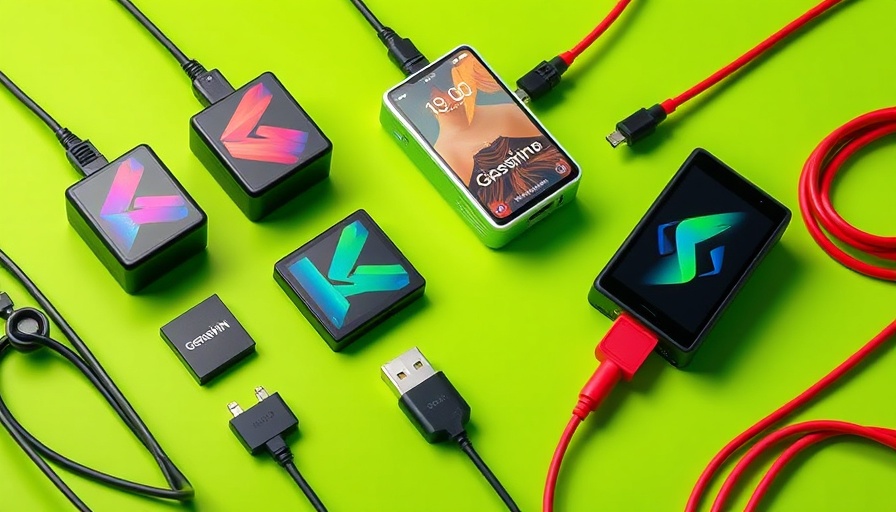
Genshin Impact charging products arranged on green background.

Ugreen’s Genshin Impact Charging Collection: A Gamer's Dream

Ugreen has taken the gaming accessories market by storm with its new line of charging products, specifically designed for fans of the critically acclaimed game, Genshin Impact. This vibrant collection is themed around the character Kinich and his companion Ajaw, delivering not just functionality but also a hefty dose of style and fandom.

What’s in the Collection?

The Ugreen x Genshin Impact lineup features four standout products: a power bank, wireless charging stand, charging plug, and cable. The highlight is undoubtedly the Ugreen Nexode Power Bank Genshin Impact Edition, which boasts a hefty 20,000mAh capacity. With two USB Type-C ports and a USB-A output, it's designed for both power and practicality. The standout feature is a Type-C port that supports a staggering 100W fast charging, capable of powering an iPhone 15 Pro from zero to 55% in just half an hour. That's not just efficiency; that's a game-changer for on-the-go gamers.

Design Meets Function

What truly sets this collection apart is the eye-catching design. The power bank showcases stunning artwork featuring Kinich and Ajaw, complemented by a nifty smart display that reveals battery status and charging progress. And it doesn’t stop there; the animations featuring Ajaw add a layer of personalization that fans will love.

Wireless Charging Unleashed

Next up, the Ugreen Magflow Wireless Charger Genshin Impact Edition is a must-have for Apple users. Its design not only incorporates elements from the game but also adapts to your travel needs. It’s compact, foldable, and offers 15W fast charging alongside a MagSafe-compatible pad. You can easily adjust the charging angle by up to 75 degrees, and it even includes a charging dock for your earbuds. Now, that’s versatility!

Pricing That Packs a Punch

The pricing for these products is quite reasonable, especially considering their unique designs and features. The Ugreen Nexode Power Bank is priced at $89.99, while the Magflow Wireless Charger comes in at $59.99. Given their special edition nature, these prices seem like a steal for fans looking to blend practicality with fandom.

How Ugreen Is Reinventing Accessories

Ugreen’s approach in creating products that resonate deeply with gaming culture illustrates a broader trend of personalization in tech accessories today. It’s not merely about gadgets; it’s about creating experiences that enrich the lifestyle of gamers. By intertwining charging technology with beloved game mechanics and characters, Ugreen is not just making accessories; it’s enhancing the entire gaming experience.

Conclusion: A Charge Worth Taking

The Ugreen x Genshin Impact collection isn’t just for fans; it’s for anyone who appreciates thoughtful design and efficient technology. These products are not only practical but also serve as vibrant statements of one’s gaming passion. Ready to take your charging game to the next level? Explore Ugreen’s latest offerings and bring a bit of Genshin Impact home with you!

Fitness

0 Comments

Write A Comment

*
*
Related Posts All Posts

Discover Why Sennheiser HDB 630 Headphones Set a New Standard for Wireless Audio

Update The Next Level of Wireless Listening: Sennheiser HDB 630 For audiophiles and casual listeners alike, Sennheiser has introduced a groundbreaking product that promises to elevate your listening experience: the Sennheiser HDB 630. These wireless headphones are not just about eliminating cords; they are about delivering high-resolution audio with incredible detail and clarity. With the added functionality of a USB-C dongle, this set of headphones comes equipped for a immersive audio experience, easily making it a standout option in a competitive market. What Makes the HDB 630 Unique? The Sennheiser HDB 630 takes the audio quality of traditional wired headphones and translates it into a wireless format. Featuring support for aptX, aptX HD, and aptX Adaptive codecs, the headphones can provide up to 24-bit / 96 kHz audio quality with the included BTD 700 dongle. This is a game-changer for Apple device users who have been left in the dust when it comes to high-fi audio streaming. With this dongle, Sennheiser has effectively enabled high-fidelity audio to a broader audience, meeting the demand for richer sound on portable devices. Sound Quality That Stands Out During testing, it was evident that Sennheiser’s prowess in audio quality remains intact. The HDB 630 achieves a beautifully balanced sound profile. Listeners can expect punchy yet controlled bass, detailed midrange, and well-managed treble. For those who like to personalize their audio experience, the SmartControlPlus app offers customizable parametric EQ settings and crossfeed functions. This level of customization is rarely seen in rivals, making the HDB 630 a compelling choice for those who love to tweak their sound. Comfort and Usability Considerations While Sennheiser made significant strides in sound quality, some users may find areas for improvement in comfort and control. The touch controls, while innovative, leave some users wanting more intuitive functionality. Additionally, the headphones aren’t the lightest in their category, leading to potential discomfort during long listening sessions. However, their impressive 60-hour battery life—even with active noise cancellation on—offers a substantial benefit that many competing models lack. Comparative Analysis: HDB 630 vs Rivals In comparison with renowned competitors like the Sony WH-1000XM6 and Bowers & Wilkins Px7 S3, the HDB 630 positions itself very well. Although it may lack in terms of advanced noise-cancellation features, the expansive sound quality is often cited as superior. Additionally, the inclusion of the BTD 700 dongle gives the Sennheiser headphones a distinct advantage, particularly for iPhone users who seek a richer audio experience. Conclusion: A Worthy Investment The Sennheiser HDB 630 marks a significant leap in the evolution of wireless headphones. With immersive, detailed sound quality, a wealth of customization options, and an exceptional battery life, these headphones cater to both hardcore audiophiles and those looking for everyday functionality. While there are minor drawbacks in terms of design and controls, these don’t significantly detract from the overall package. If you want an audiophile-grade sound in a wireless format, the HDB 630 is undoubtedly worth considering.

The Ethernet Revolution: Can It Outperform InfiniBand in AI Networking?

Update Shifting Gears: The Ethernet Revolution in AI Networking The tech world is buzzing as a group of powerhouse companies—Meta, Nvidia, OpenAI, AMD, and others—come together under the newly launched Ethernet for Scale-Up Networking (ESUN) initiative. This collaborative endeavor, driven by the Open Compute Project, aims to redefine how we connect artificial intelligence (AI) workloads within data centers. With Ethernet poised to compete with InfiniBand—currently the dominant force in high-speed networking—ESUN brings a fresh perspective to the table that promises to transform AI infrastructure. Unpacking the Promise of Ethernet for AI Infrastructure InfiniBand has long held the crown in AI networking, catering to about 80% of the infrastructure that links GPUs and accelerators. Its proprietary nature, however, has left room for alternatives, and now Ethernet's increased maturity and cost-effectiveness are being touted as viable solutions for scaling AI operations. This shift represents a democratization of technology; Ethernet's open standards could offer extensive interoperability, simplifying the management of complex AI tasks. Future Insights: Networking Efficiency and Scale As data centers become more intricate, the importance of reliable networking grows exponentially. Innovations like the ESUN initiative signal a pivotal moment, where Ethernet addresses significant challenges such as network failures and congestion—pain points that can disrupt AI performance. Cisco’s leadership in developing robust Ethernet stack features, such as link layer retry and credit-based flow control, is already gearing towards redefining how we approach AI workloads. Rivalry or Collaboration? A New Era for Scaling AI By embracing an open networking framework, the ESUN initiative encourages collaboration amongst data center operators, giving rise to a new ecosystem where performance isn’t limited by proprietary technologies. The goal is clear: to ensure that scalable architectures can handle the demanding computational requirements of AI and high-performance computing (HPC) without the bottlenecks associated with traditional networking. The Competitive Advantage: Will Ethernet Overtake InfiniBand? Ultimately, whether Ethernet can genuinely rival InfiniBand depends on several factors, including the ability to prove performance under AI's most intensive workloads. The path forward is fraught with challenges yet holds immense promise for entities willing to test the waters of standards-based technology. Early adopters may experience not just cost savings but also faster and more efficient AI model development. The ESUN initiative stands as a bold step toward making AI infrastructure more accessible and adaptable. As industry giants work collaboratively, the potential to reshape how we connect AI systems is becoming clearer.

Nvidia and Samsung's Alliance to Develop Custom AI Hardware: What It Means for the Industry

Update Why Nvidia's Partnership with Samsung is a Game Changer in AI Hardware In a decisive move that could reshape the AI hardware landscape, Nvidia has announced a collaboration with Samsung Foundry aimed at constructing custom non-x86 CPUs and XPUs. This partnership marks a strategic effort to fend off competition from formidable players like OpenAI, Google, and AWS, as the AI race intensifies. Revealed during the 2025 Open Compute Project (OCP) Global Summit, Nvidia's participation in Samsung's foundry capabilities signifies its ambition to dominate the next-generation data center ecosystem. Understanding NVLink Fusion and Its Impact At the heart of this partnership lies Nvidia's NVLink Fusion technology, which facilitates high-speed communication between CPUs, GPUs, and accelerators. This allows for direct connections within rack-scale systems, effectively minimizing traditional performance bottlenecks that can occur in computing architectures. The integration of Samsung Foundry into this ecosystem not only enhances Nvidia’s manufacturing ability but also extends its reach and control across the AI computing stack. Why This Shift Matters for AI and Technology The collaboration reflects a broader industry trend where hardware manufacturers are increasingly designing bespoke chips to serve their specific needs. Rivals like Meta and Google are developing their own custom chips to reduce reliance on Nvidia’s technology. By leveraging Samsung’s advanced semiconductor capabilities, Nvidia aims to strengthen its position in a market that is witnessing a shift toward in-house chip design. The Innovation Behind Custom CPUs and XPUs Samsung's role in this partnership means they will provide end-to-end support—from design to manufacturing—for custom silicon integrated with Nvidia's NVLink interface. For tech companies engaged in AI, this change means they can bypass traditional bottlenecks and unlock superior performance in their data centers. Samsung will become a pivotal player in delivering devices that utilize Nvidia’s powerful architecture while also allowing for innovation in AI capabilities. Broader Implications: Control vs. Openness While this partnership strengthens Nvidia's grip on the AI landscape, it raises essential questions about vendor lock-in. Under the current strategy, custom chips must retain compatibility with Nvidia products to function optimally, potentially limiting manufacturers. This could stifle a more open market dynamic where diverse players innovate outside of Nvidia’s ecosystem. The Future of AI Hardware Competition As companies like Nvidia and Samsung set the stage for cutting-edge AI technologies, the implications for the future are profound. The importance of controlling the silicon-to-software pipeline becomes ever more significant, as it will determine market leadership. The landscape is shifting; those who can efficiently integrate custom AI solutions into their systems will thrive, while those that oppose will need to adapt quickly or risk being left behind. Nvidia’s collaboration with Samsung is not merely a tactical alliance; it is a strategic maneuver to ensure its position as an industry leader in AI technology. As the competition heats up, the real question remains: who will ultimately design the future of AI silicon?

Terms of Service

Privacy Policy

Core Modal Title

Sorry, no results found

You Might Find These Articles Interesting

T
Please Check Your Email
We Will Be Following Up Shortly
*
*
*