Add Row
Add Element
Chambers First Class Connetions KC
update
Jet Centers USA -
Learn to Fly Schools
Where Jet Setter's Stay and Play
cropper
update
Add Element
  • HOME
  • Categories
    • Restaurants
    • Jets Charter Private
    • Fitness
    • Flight Training Centers
    • Jet Centers & FBO
    • Aircraft & Automobiles
    • Outdoor Fun
    • Hotels & Resorts
    • Extra Travel News
    • Featured
    • Catering
    • Restaurants Vegan
    • Toys For Boys
    • OJC Airport - Corporate Gold Directory
    • Business Directory Johnson County
    • Airport Sponsers
    • EAA
    • Ultralights
    • FXE Fort Lauderdale Business Directory
    • EAA AirVenture
Add Element
  • update
  • update
  • update
  • update
  • update
  • update
  • update
February 27.2025
2 Minutes Read

Nvidia and AMD Gear Up for March's Epic GPU Showdown

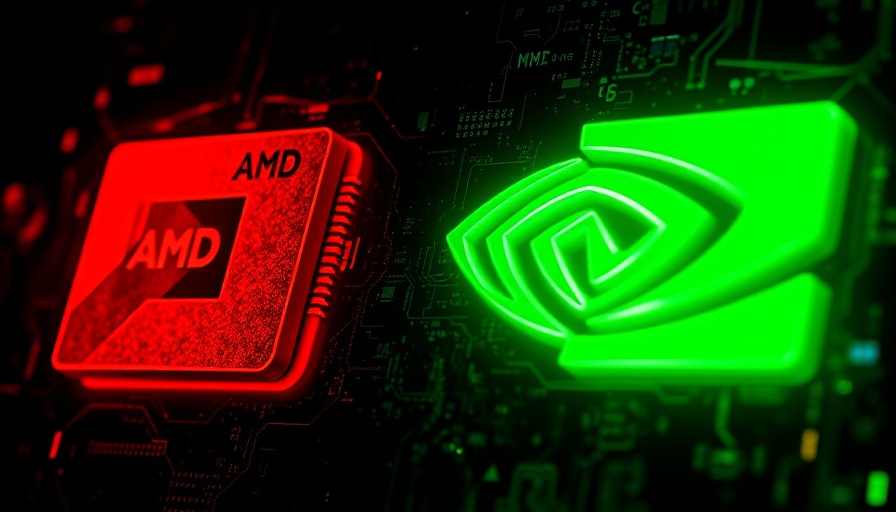
Nvidia RTX 5060: Nvidia and AMD logos in vibrant digital display

The Anticipation of a GPU Showdown

The gaming community is buzzing with excitement as rumors circulate about Nvidia’s upcoming RTX 5060 series launch in March. Both the RTX 5060 and its enhanced counterpart, the RTX 5060 Ti, are expected to drop around the same time AMD rolls out its Radeon RX 9000 series GPUs. This direct competition between major industry players promises to deliver options that cater to gamers seeking quality without breaking the bank. The stakes are high, with both companies hoping to claim dominance over the mid-range GPU market.

Historical Context: A Legacy of Competition

The rivalry between Nvidia and AMD isn't new. Historically, these giants have battled for supremacy, with each release setting the stage for the next. In recent years, gamers have come to expect more from their hardware, particularly as gaming technology outpaces current capabilities. With AMD making waves with recent releases, many fans are eager to see how Nvidia will respond with their new offerings.

Performance Considerations: A Shift in VRAM Standards?

What gamers are particularly concerned about is the rumored use of 8GB of VRAM in the upcoming RTX 5060 and 5060 Ti cards. With games increasingly demanding more memory, sticking to this VRAM standard could hinder performance. Unlike Intel’s new Battlemage GPUs, which offer 10GB to 12GB options, Nvidia’s potential adherence to 8GB might leave gamers wanting more. Many are wondering if this decision reflects a misunderstanding of gamer needs or a strategic gamble by Nvidia.

Future Predictions: What Lies Ahead for Gamers?

Looking ahead, consumers are keenly aware that GPU technology is in constant flux, and the demand for better hardware will only grow. Predictions suggest that both Nvidia and AMD will need to adapt quickly to market demands, possibly leading to future iterations that could redefine performance standards. If either side fails to meet the evolving needs of gamers, they risk losing their competitive edge.

Understanding Gamer Sentiment

As we look forward to this competitive showdown, it’s essential to consider how this impacts everyday gamers. Affordable, high-performance GPUs are crucial for many who want to experience gaming at its best without overspending. The outcome of this launch could greatly influence the landscape of PC gaming, making it even more critical for gamers to remain engaged with the latest news and developments.


Fitness

0 Comments

Write A Comment

*
*
Related Posts All Posts

Meet ChatGPT Atlas Browser: Your Next AI-Powered Online Companion!

Update Revolutionizing Browsing: Welcome to ChatGPT Atlas In a world where technology continues to shape our online activities, OpenAI’s latest innovation, the ChatGPT Atlas browser, is set to transform the way we interact with the web. This browser melds AI capabilities directly into browsing, creating a more engaging and efficient way to navigate. Instead of merely acting as a passive window to the internet, the Atlas browser encourages active interaction, suggesting a dynamic shift in our digital experiences. What Sets ChatGPT Atlas Apart? Unlike traditional browsers that simply serve as interfaces to access websites, ChatGPT Atlas redefines what a browser can be. It's not just a browser that accompanies a chatbot; instead, it embodies the chatbot's functionality at its core. Users can engage with Atlas to execute tasks seamlessly—even asking it to find cheaper hotels, summarize content, or plan events, all within one interface without toggling between tabs. The Power of Browsing Contextually With its innovative memory and context awareness features, ChatGPT Atlas offers a browsing experience with a personal touch. Users can opt into the memory feature, allowing Atlas to remember their previous interactions, such as websites visited and queries made. This feature aims to provide contextualized assistance, enabling smart follow-ups without the need for repetitive queries. Imagine telling Atlas to retrieve information from your browsing history or ensuring continuity in your projects without having to restate details. Agent Mode: Your New Digital Assistant Perhaps the most groundbreaking feature is the introduction of 'Agent Mode,' which empowers ChatGPT to perform tasks interactively within the browser. This feature allows users to instruct Atlas to execute multi-step processes while keeping them informed. For instance, you could ask Atlas to help organize a dinner party, which could involve searching for recipes, creating a shopping list, and recommending nearby stores—all handled within a single environment. This level of interactivity is a significant leap from what contemporary browsers offer. Why This Matters to Users As we dive deeper into a digital world, the tools we use must adapt to our evolving needs. ChatGPT Atlas exemplifies this shift towards a more integrated approach in digital assistance. With its predictive capabilities and proactive engagement, users can navigate online spaces more intuitively, making their digital lives easier and more productive. This innovation particularly resonates in a culture increasingly reliant on digital solutions to accomplish everyday tasks. Final Thoughts on the Future of Browsing The launch of ChatGPT Atlas signifies more than just a new browser; it hints at the future of digital interaction. As the technology embraces context and action, we may soon find ourselves using web browsers less as mere tools and more as intelligent assistants in our daily digital navigation. With competition heating up between established giants like Chrome and this fresh alternative, the future promises exciting advancements in online user experience.

Discover Why Sennheiser HDB 630 Headphones Set a New Standard for Wireless Audio

Update The Next Level of Wireless Listening: Sennheiser HDB 630 For audiophiles and casual listeners alike, Sennheiser has introduced a groundbreaking product that promises to elevate your listening experience: the Sennheiser HDB 630. These wireless headphones are not just about eliminating cords; they are about delivering high-resolution audio with incredible detail and clarity. With the added functionality of a USB-C dongle, this set of headphones comes equipped for a immersive audio experience, easily making it a standout option in a competitive market. What Makes the HDB 630 Unique? The Sennheiser HDB 630 takes the audio quality of traditional wired headphones and translates it into a wireless format. Featuring support for aptX, aptX HD, and aptX Adaptive codecs, the headphones can provide up to 24-bit / 96 kHz audio quality with the included BTD 700 dongle. This is a game-changer for Apple device users who have been left in the dust when it comes to high-fi audio streaming. With this dongle, Sennheiser has effectively enabled high-fidelity audio to a broader audience, meeting the demand for richer sound on portable devices. Sound Quality That Stands Out During testing, it was evident that Sennheiser’s prowess in audio quality remains intact. The HDB 630 achieves a beautifully balanced sound profile. Listeners can expect punchy yet controlled bass, detailed midrange, and well-managed treble. For those who like to personalize their audio experience, the SmartControlPlus app offers customizable parametric EQ settings and crossfeed functions. This level of customization is rarely seen in rivals, making the HDB 630 a compelling choice for those who love to tweak their sound. Comfort and Usability Considerations While Sennheiser made significant strides in sound quality, some users may find areas for improvement in comfort and control. The touch controls, while innovative, leave some users wanting more intuitive functionality. Additionally, the headphones aren’t the lightest in their category, leading to potential discomfort during long listening sessions. However, their impressive 60-hour battery life—even with active noise cancellation on—offers a substantial benefit that many competing models lack. Comparative Analysis: HDB 630 vs Rivals In comparison with renowned competitors like the Sony WH-1000XM6 and Bowers & Wilkins Px7 S3, the HDB 630 positions itself very well. Although it may lack in terms of advanced noise-cancellation features, the expansive sound quality is often cited as superior. Additionally, the inclusion of the BTD 700 dongle gives the Sennheiser headphones a distinct advantage, particularly for iPhone users who seek a richer audio experience. Conclusion: A Worthy Investment The Sennheiser HDB 630 marks a significant leap in the evolution of wireless headphones. With immersive, detailed sound quality, a wealth of customization options, and an exceptional battery life, these headphones cater to both hardcore audiophiles and those looking for everyday functionality. While there are minor drawbacks in terms of design and controls, these don’t significantly detract from the overall package. If you want an audiophile-grade sound in a wireless format, the HDB 630 is undoubtedly worth considering.

The Ethernet Revolution: Can It Outperform InfiniBand in AI Networking?

Update Shifting Gears: The Ethernet Revolution in AI Networking The tech world is buzzing as a group of powerhouse companies—Meta, Nvidia, OpenAI, AMD, and others—come together under the newly launched Ethernet for Scale-Up Networking (ESUN) initiative. This collaborative endeavor, driven by the Open Compute Project, aims to redefine how we connect artificial intelligence (AI) workloads within data centers. With Ethernet poised to compete with InfiniBand—currently the dominant force in high-speed networking—ESUN brings a fresh perspective to the table that promises to transform AI infrastructure. Unpacking the Promise of Ethernet for AI Infrastructure InfiniBand has long held the crown in AI networking, catering to about 80% of the infrastructure that links GPUs and accelerators. Its proprietary nature, however, has left room for alternatives, and now Ethernet's increased maturity and cost-effectiveness are being touted as viable solutions for scaling AI operations. This shift represents a democratization of technology; Ethernet's open standards could offer extensive interoperability, simplifying the management of complex AI tasks. Future Insights: Networking Efficiency and Scale As data centers become more intricate, the importance of reliable networking grows exponentially. Innovations like the ESUN initiative signal a pivotal moment, where Ethernet addresses significant challenges such as network failures and congestion—pain points that can disrupt AI performance. Cisco’s leadership in developing robust Ethernet stack features, such as link layer retry and credit-based flow control, is already gearing towards redefining how we approach AI workloads. Rivalry or Collaboration? A New Era for Scaling AI By embracing an open networking framework, the ESUN initiative encourages collaboration amongst data center operators, giving rise to a new ecosystem where performance isn’t limited by proprietary technologies. The goal is clear: to ensure that scalable architectures can handle the demanding computational requirements of AI and high-performance computing (HPC) without the bottlenecks associated with traditional networking. The Competitive Advantage: Will Ethernet Overtake InfiniBand? Ultimately, whether Ethernet can genuinely rival InfiniBand depends on several factors, including the ability to prove performance under AI's most intensive workloads. The path forward is fraught with challenges yet holds immense promise for entities willing to test the waters of standards-based technology. Early adopters may experience not just cost savings but also faster and more efficient AI model development. The ESUN initiative stands as a bold step toward making AI infrastructure more accessible and adaptable. As industry giants work collaboratively, the potential to reshape how we connect AI systems is becoming clearer.

Terms of Service

Privacy Policy

Core Modal Title

Sorry, no results found

You Might Find These Articles Interesting

T
Please Check Your Email
We Will Be Following Up Shortly
*
*
*