

Add Row
Add Element
Chambers First Class Connetions KC
update
Jet Centers USA -
Learn to Fly Schools
Where Jet Setter's Stay and Play
cropper
update
Add Element
  • HOME
  • Categories
    • Restaurants
    • Jets Charter Private
    • Fitness
    • Flight Training Centers
    • Jet Centers & FBO
    • Aircraft & Automobiles
    • Outdoor Fun
    • Hotels & Resorts
    • Extra Travel News
    • Featured
    • Catering
    • Restaurants Vegan
    • Toys For Boys
    • OJC Airport - Corporate Gold Directory
    • Business Directory Johnson County
    • Airport Sponsers
    • EAA
    • Ultralights
    • FXE Fort Lauderdale Business Directory
    • EAA AirVenture
Add Element
  • update
  • update
  • update
  • update
  • update
  • update
  • update
June 29.2025
2 Minutes Read

Shell's New Cooling Fluid for Data Centers Reshapes Tech Sustainability

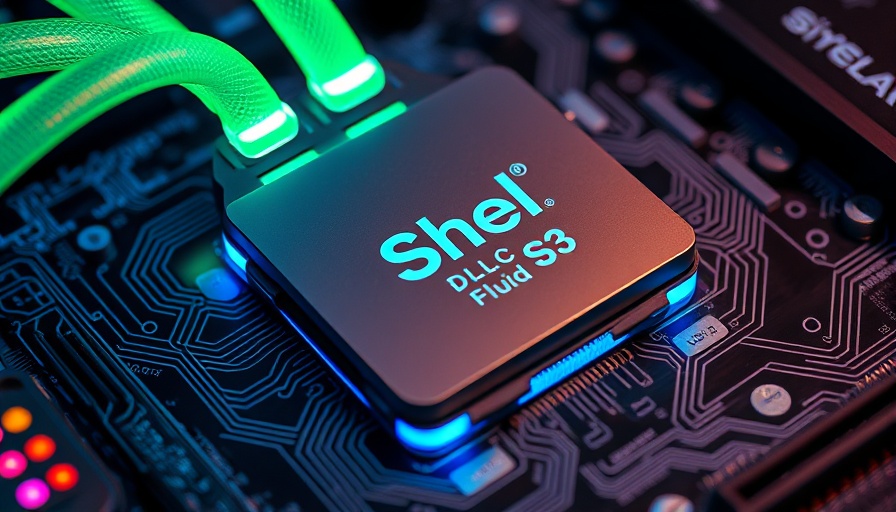
Direct liquid cooling fluid for data centers in a computer processor setup.

Revolutionizing Data Center Cooling with Shell's New Fluid

In an unprecedented move, Shell, one of the world's largest oil companies, has thrown its hat into the ring of technological innovation with the launch of its proprietary re-cooling solution, Shell DLC Fluid S3. Tailored specifically to the needs of cutting-edge data centers, this cooling fluid is set to redefine how high-performance computing operates in the era of artificial intelligence.

Why Direct Liquid Cooling is the Future

As data centers grapple with escalating power demands—currently consuming 2-3% of global energy—traditional air cooling systems are reaching their limits. Enhanced efficiency is not just a bonus; it’s a necessity. According to Shell, the new fluid could boost Power Usage Effectiveness (PUE) by as much as 27%, leading to a significant drop in reliance on energy-hungry air conditioning units. This leap towards direct liquid cooling is not merely a trend but an essential evolution for sustainable digital infrastructure.

A Deeper Dive into the Technology

The Shell DLC Fluid S3 isn’t your average coolant; it’s a propylene glycol-based solution designed to target heat-generating components, specifically CPUs and GPUs. This results in more efficient cooling when powering AI applications, where temperature control is crucial to maintaining performance and longevity of equipment. Notably, Shell’s fluid meets the stringent Open Compute Project PG25 standards, ensuring compatibility across a wide variety of server architectures.

Shell’s Commitment to Smart Cooling Solutions

Shell is not alone in this initiative—its competitor, Castrol, is also innovating in the cooling sphere with dielectric fluids geared toward immersion cooling systems. However, Shell's ambitious approach not only offers a direct-to-chip solution but also encompasses full immersion options, a first in their evolving product lineup. As Aysun Akik, VP of New Business Development at Shell Lubricants, articulates, this range aims to address the diverse cooling demands of present and future data centers.

Environmental Impact and Industry Implications

The launch of Shell DLC Fluid S3 stands as a beacon for environmental accountability within the tech industry. As energy consumption in data centers continues to rise, adopting more efficient cooling systems can significantly lower carbon footprints. This fluid represents a proactive approach toward eco-friendly practices in an industry that is often scrutinized for its high energy usage.

Looking Ahead: Feedback from Industry Experts

As this technology permeates the market, industry experts are keenly observing its impact. Early reviews from tech analysts suggest that the efficiency gains could spark a ripple effect, prompting other tech giants to reevaluate their cooling solutions and environmental stances. The arrival of Shell's coolant is not merely a product launch; it's a clarion call for an industry-wide transition toward sustainable technologies.

With the stakes higher than ever in the race for digital efficiency, the implications of Shell's innovative cooling solutions could be transformative, positioning the company as a critical player in the future of AI and high-performance computing.

Fitness

Write A Comment

*
*
Related Posts All Posts

Nvidia and Samsung's Alliance to Develop Custom AI Hardware: What It Means for the Industry

Update Why Nvidia's Partnership with Samsung is a Game Changer in AI Hardware In a decisive move that could reshape the AI hardware landscape, Nvidia has announced a collaboration with Samsung Foundry aimed at constructing custom non-x86 CPUs and XPUs. This partnership marks a strategic effort to fend off competition from formidable players like OpenAI, Google, and AWS, as the AI race intensifies. Revealed during the 2025 Open Compute Project (OCP) Global Summit, Nvidia's participation in Samsung's foundry capabilities signifies its ambition to dominate the next-generation data center ecosystem. Understanding NVLink Fusion and Its Impact At the heart of this partnership lies Nvidia's NVLink Fusion technology, which facilitates high-speed communication between CPUs, GPUs, and accelerators. This allows for direct connections within rack-scale systems, effectively minimizing traditional performance bottlenecks that can occur in computing architectures. The integration of Samsung Foundry into this ecosystem not only enhances Nvidia’s manufacturing ability but also extends its reach and control across the AI computing stack. Why This Shift Matters for AI and Technology The collaboration reflects a broader industry trend where hardware manufacturers are increasingly designing bespoke chips to serve their specific needs. Rivals like Meta and Google are developing their own custom chips to reduce reliance on Nvidia’s technology. By leveraging Samsung’s advanced semiconductor capabilities, Nvidia aims to strengthen its position in a market that is witnessing a shift toward in-house chip design. The Innovation Behind Custom CPUs and XPUs Samsung's role in this partnership means they will provide end-to-end support—from design to manufacturing—for custom silicon integrated with Nvidia's NVLink interface. For tech companies engaged in AI, this change means they can bypass traditional bottlenecks and unlock superior performance in their data centers. Samsung will become a pivotal player in delivering devices that utilize Nvidia’s powerful architecture while also allowing for innovation in AI capabilities. Broader Implications: Control vs. Openness While this partnership strengthens Nvidia's grip on the AI landscape, it raises essential questions about vendor lock-in. Under the current strategy, custom chips must retain compatibility with Nvidia products to function optimally, potentially limiting manufacturers. This could stifle a more open market dynamic where diverse players innovate outside of Nvidia’s ecosystem. The Future of AI Hardware Competition As companies like Nvidia and Samsung set the stage for cutting-edge AI technologies, the implications for the future are profound. The importance of controlling the silicon-to-software pipeline becomes ever more significant, as it will determine market leadership. The landscape is shifting; those who can efficiently integrate custom AI solutions into their systems will thrive, while those that oppose will need to adapt quickly or risk being left behind. Nvidia’s collaboration with Samsung is not merely a tactical alliance; it is a strategic maneuver to ensure its position as an industry leader in AI technology. As the competition heats up, the real question remains: who will ultimately design the future of AI silicon?

The Piranha Plant Camera Drops to $39.99: Should You Buy It Now?

Update The Latest Buzz on the Piranha Plant Camera's Price Drop The Hori Piranha Plant Camera for Nintendo Switch 2 is making waves in the gaming community with its recent price reduction. Initially priced at $59.99 when launched in June 2025, it's now available for a reasonably low price of $39.99 in the US and £26.38 in the UK. This marks a significant saving of 33% and 22%, respectively, positioning the camera as a budget-friendly option for gamers looking to enhance their gaming experience. Why the Price Cut Matters to Gamers This price cut isn't just a stroke of luck for gamers; it's indicative of a growing accessibility trend in gaming accessories, particularly those for newer consoles like the Switch 2. As more gamers adopt the Switch 2, having an affordable camera option can enhance their gameplay through video chat options in popular titles like Mario Kart World and Mario Party Jamboree. The camera has become an essential accessory for fans wanting to connect with their friends online. The Functionality of the Piranha Plant Camera While the aesthetic appeal of the Piranha Plant—complete with its whimsical design reminiscent of beloved Mario franchise characters—is undeniable, the actual technology leaves something to be desired. With a resolution of 640x480 pixels and a frame rate of 30fps, players may find the video quality somewhat nostalgic, reminiscent of older systems like the Nintendo DSi. However, for gamers looking to share moments and connect via GameChat, this resolution should suffice, especially at its new low price. Is the Camera Worth the Investment? Determining whether to buy the Piranha Plant Camera boils down to your gaming habits. If you're a fan of games that utilize the camera function, then the accessory becomes a valuable addition. However, if your gaming mainly revolves around solo experiences or titles that don’t support camera use, you might find that the investment isn't necessary. The current pricing, especially at the new budget-friendly rates, might make it too tempting to pass up, even for casual gamers. What's Next for Nintendo Switch Accessories? As the gaming landscape continues to evolve, accessories like the Piranha Plant Camera highlight the necessity for innovation within the community. It opens the door for other peripherals to become mainstream. Could we see a rise in accessory use for other gaming consoles, or will developers integrate these abilities directly into existing gameplay experiences? The possibilities are endless. Final Thoughts on the Piranha Plant Camera At the end of the day, the Hori Piranha Plant Camera for Nintendo Switch 2 blends fun and functionality while standing out as a charming accessory. With its current attractive price point, it indeed deserves consideration—not just for die-hard Mario fans, but for anyone looking to elevate their online gaming experience. So, is it worth buying? If you see yourself utilizing its features, absolutely!

M3 MacBook Air vs. M5 MacBook Pro: Which Should You Buy?

Update Why the M3 MacBook Air Might Be Your Best Budget-Friendly Choice The recent launch of the M5 MacBook Pro raises an important question for many potential buyers: Should you invest in the latest model or consider an older, more budget-friendly alternative? While the M5 MacBook Pro boasts impressive specifications and capabilities, it may not be the right fit for everyone. The M3 MacBook Air, on the other hand, offers a compelling mix of performance and affordability that suits the needs of most users. This laptop’s price point often hovers around half that of the M5, making it a compelling option for anyone mindful of their budget. The Performance Paradox: Is More Power Always Better? Apple claims that the M5 chip provides a stunning 1.6 times graphics performance increase over its predecessor, but how much of that power do everyday users really need? For most tasks, like browsing, streaming, or general productivity, the M3 chip serves very well. In fact, recent reviews have praised the M3 MacBook Air not just for its performance, but for its lightweight design and portability—features important to students and professionals on the go. Comparative Analysis: M3 vs M5 Users find both the M3 MacBook Air and the M5 MacBook Pro capable, but they cater to different needs. The M5 excels in demanding tasks like video editing and gaming thanks to enhanced cooling systems and performance features. However, the average user typically doesn’t require those added capabilities. As highlighted in a recent review, the M3 MacBook Air can handle everyday software and applications with ease, making it a worthwhile investment for the majority. The Cost Factor: Saving Big with the M3 With a base price of $1,599 for the M5 MacBook Pro, the cost can be a significant barrier for many. Conversely, options like the refurbished M3 MacBook Air can often be found for as little as $649.99, providing excellent value without sacrificing vitally important performance. For budget-conscious consumers, spending substantially less without losing core functionality is an obvious choice. Future-Proofing or Overkill? Understanding Your Needs Many buyers fall into the trap of purchasing the latest technology in hopes of 'future-proofing' their investment. However, the reality is that the capabilities of the M3 MacBook Air will satisfy most users for years to come. Unless you plan on engaging in heavy-duty tasks like 3D rendering or gaming, the M5 MacBook Pro may simply be overkill. Conclusion: Choose Wisely for Your Needs In a rapidly evolving tech landscape, understanding your unique needs is more important than ever. While the M5 MacBook Pro is certainly a powerful machine, its benefits may be too specialized for average users. Between the significant cost difference and the adequate performance of older models like the M3 MacBook Air, it becomes apparent that value and necessity should lead your purchasing decisions.

Terms of Service

Privacy Policy

Core Modal Title

Sorry, no results found

You Might Find These Articles Interesting

T
Please Check Your Email
We Will Be Following Up Shortly
*
*
*