

Add Row
Add Element
Chambers First Class Connetions KC
update
Jet Centers USA -
Learn to Fly Schools
Where Jet Setter's Stay and Play
cropper
update
Add Element
  • HOME
  • Categories
    • Restaurants
    • Jets Charter Private
    • Fitness
    • Flight Training Centers
    • Jet Centers & FBO
    • Aircraft & Automobiles
    • Outdoor Fun
    • Hotels & Resorts
    • Extra Travel News
    • Featured
    • Catering
    • Restaurants Vegan
    • Toys For Boys
    • OJC Airport - Corporate Gold Directory
    • Business Directory Johnson County
    • Airport Sponsers
    • EAA
    • Ultralights
    • FXE Fort Lauderdale Business Directory
    • EAA AirVenture
Add Element
  • update
  • update
  • update
  • update
  • update
  • update
  • update
September 03.2025
2 Minutes Read

Unlocking India's Luxury Potential: The Need for a Unique Language

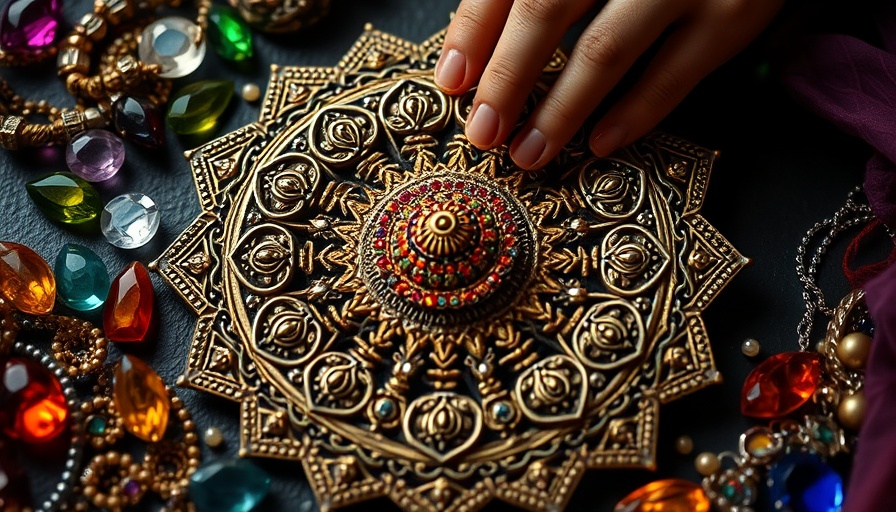
Intricate jewelry crafting representing Indian luxury language and identity.

Why India’s Luxury Market Needs Its Own Voice

In an era where global luxury is synonymous with distinct cultural identities, India’s approach seems remarkably fragmented. While we admire majestic French maisons or Italian casa di moda, India remains largely invisible, operating within the luxury sector as a mere supplier rather than a creator. This lack of a codified language—an inspirational framework that encapsulates India’s rich artisanal traditions—serves as a barrier to truly claiming its space on the world stage.

Understanding the Paradox of Indian Craftsmanship

India boasts a wealth of intricate craftsmanship that resonates within the luxury narrative everywhere—from the luxurious Kashmir cashmere adorning high-fashion runways to the unique Jaipur-cut stones gracing fine jewelry. Yet, in discussions of timeless brands, Indian luxury remains overlooked, often appearing only as the source of materials rather than a recognized power in luxury creation.

Unique Frameworks for Artisan Identity

To stand alongside the iconic brands of Europe, Indian luxury needs a narrative that is both robust and culturally resonant. The frameworks of Shilp Griha (House of Craft), Ratnaalaya (Treasure House), and Kalaadhishthana (Seat of the Arts) are pivotal. They provide a foundation upon which Indian luxury can build its identity, emphasizing community-led excellence over individual artistry, thus nurturing a collective ethos that speaks deeply to both artisans and consumers.

A Call for Cultural Empowerment and Authenticity

As Indian luxury continues to evolve, the focus must shift towards creating narratives that celebrate indigenous craftsmanship. This is not about copying successful Western terminologies but developing a distinct language that encapsulates India's unique heritage. With the right linguistic and conceptual tools, Indian artisans can finally share their stories and treasures in ways that resonate globally.

Jet Centers & FBO

Write A Comment

*
*
Related Posts All Posts

How AI Adoption Is Shaping a New Era in Luxury Industry Competition

Update AI's Impact On Luxury: A New EraThe luxury industry has reached a crucial point in its relationship with artificial intelligence (AI), signaling a shift that may redefine its future. Traditionally bolstered by craftsmanship and rich heritage, brands now face the necessity of integrating technology not merely as a tool, but as a pivotal aspect of their operational framework. This transformation is echoed in a recent survey revealing that nearly one in three luxury executives consider AI integral to their operations, representing a substantial shift for an industry once known for valuing the human touch above all.The AI Adoption DivideWhile AI's adoption is inevitable, a growing divide has emerged within the industry. A majority of executives acknowledge that delays in adoption are detrimental, yet almost half remain entrenched in experimental phases, often what insiders call “pilot purgatory.” With 42% still testing AI, temporal pressures mount as those who advance to full scale integration gain competitive advantages that become harder to mimic over time. Statistics show that about 43% of brands have made the leap into comprehensive implementation, emphasizing that the urgency of AI integration should be on every luxury executive’s agenda.The Role of Data in AI TransformationHowever, realizing the full potential of AI goes hand-in-hand with overcoming data challenges. Fragmented data sources, with customer information scattered across various systems, pose a formidable barrier to effective AI application. Cited by 37% of luxury executives, the challenge of data fragmentation stifles the coherent insights AI aims to provide. Establishing a streamlined platform for data collection and integrity is essential, not only to harness the power of AI but to produce outputs that truly reflect consumer desires and behaviors.Stepping Forward TogetherThe path towards AI integration is not merely technological but deeply entwined with human factors—organizational readiness and courage to embrace change are equally pivotal. As luxury brands navigate this evolving landscape, embracing AI could not only enhance operational efficiencies but also reforge connections with their customers in unprecedented ways. The call is clear: it’s time for luxury to prioritize both data-driven decision-making and the seamless integration of technology into everyday practices.

Exploring AI's Role: Can Indian Luxury Brands Humanize Technology?

Update Can AI Enhance or Diminish Indian Luxury?As artificial intelligence rapidly transforms the global luxury landscape, Indian brands find themselves at a crucial intersection: Can the synergy of tradition and technology flourish without compromising cultural integrity? In India, luxury is not solely about opulent items; it is interwoven with centuries of artisanal skills and emotional narratives.Emotional Resonance: The Heart of LuxuryArtisan craftsmanship, or karigari, embodies the soul of Indian luxury. Drawing on rich cultural heritage, every handcrafted item tells a story, connecting the buyer not just to a product but to a legacy. This is where AI can play an invaluable role. According to Accenture’s Consumer Pulse Survey, over half of Indian consumers see generative AI as a 'good friend,' reflecting how emotional bonds are forming with technology. This emotional connection adds depth to how brands can incorporate AI without sacrificing their distinct essence.Case Studies: Successfully Merging AI with TraditionBrands like Tanishq and Myntra exemplify how thoughtful use of AI can amplify the essence of luxury. Tanishq's 'Rivaahverse' allows brides to experience heirloom jewelry virtually, blending augmented reality with traditional artistry. On the other hand, Myntra's generative design utilizes AI to create fashion pieces that resonate with youth culture while incorporating cultural motifs. This balancing act between modernity and tradition provides a refreshing model for other Indian luxury brands to follow.AI’s Potential for Responsible LuxuryAdditionally, companies like Stylumia are setting a precedent for responsible AI use. By predicting consumer demand and avoiding overproduction, they help align Indian luxury brands with sustainability goals. With rising awareness among consumers about waste and eco-friendliness, AI can help luxury brands not only refine their production processes but also connect with a customer base that values environmental responsibility.A Future of Emotion-Driven ExperiencesThe future of Indian luxury lies in creating experiences that prioritize emotional connections over mere transactional relationships. By weaving AI capabilities into the fabric of customer engagement, Indian brands can ensure they remain relevant in a fast-evolving marketplace while still honoring their rich cultural narratives. Exciting possibilities lie ahead for brands willing to embrace this nuanced approach.

Uncover Remote Luxury Lodges Creating Michelin-Worthy Meals

Update Exploring Culinary Excellence in the WildernessPicture yourself in a remote luxury lodge, situated in the midst of breathtaking landscapes where Michelin-worthy meals are prepared with precision and care. Forget the classic notion of fine dining confined to city restaurants; today’s luxury lodges across the globe are redefining what it means to enjoy exquisite cuisine in nature's embrace. Remote locations, from the deserts of Utah to the jungles of East Africa, have now become centers of culinary artistry. And at the heart of this transformation lies the ability of skilled chefs to innovate using local and sustainable ingredients.From Desert to Glacier: The Challenges and Creativity of Remote DiningChef Shon Foster encapsulates the spirit of innovation in remote kitchens, declaring, “As long as I have a heat source, I can cook.” This philosophy drives chefs to overcome challenges in sourcing ingredients and executing complex dishes in some of the world's most isolated regions. For instance, while preparing meals on the side of a Patagonian glacier or atop a Utah summit, chefs learn to adapt recipes based on what is available locally, whether it's substituting for unavailable ingredients or creatively using what they have on hand.At luxury lodges, sourcing ingredients often begins with a deep commitment to locality. The culinary teams at places like Three Camel Lodge in Mongolia and Wild Coast Tented Lodge in Sri Lanka prioritize local produce and ethically raised meats, demonstrating that even in desolate settings, one can enjoy meals that are not only delicious but also sustainable.The Evolution of Bush Dining: An African PerspectiveAcross East Africa, the perception of safari dining has evolved dramatically. Picture a multi-course meal served under a baobab tree, with the sounds of the bush as your backdrop. A shift from basic sustenance to gourmet experiences has emerged, where trained chefs infuse local flavors using techniques honed in Michelin-starred kitchens. Luxury lodges like Singita and Angama Mara have become pioneers in this culinary renaissance, merging fine dining with wild landscapes.These lodges also cultivate their gardens and work with local farmers to ensure that ingredients are fresh and sustainably sourced. It’s not uncommon to find dishes that marry local game meat with artisanal cheeses or freshly harvested vegetables, showcasing an array of flavors that resonate with both the land and the palate.Fine Dining Meets the Great Outdoors: Culinary Innovation in the BushDespite geographic challenges, chefs adapt. For instance, Wilderness Usawa in Tanzania relies on resilient crops like green bananas and pumpkin, focusing on ingredients that can withstand the journey from distant suppliers. Meanwhile, Awasi Patagonia, situated in chilly conditions, sources its proteins from its local region, emphasizing balance to ensure guests experience seasonal freshness without sacrificing flavor or quality.The beauty of dining in these remote locations isn’t limited to taste—it is also in the experience itself. Imagine dining with the Milky Way as your ceiling or enjoying a fireside feast after a day spent exploring vibrant wilderness. This enchanting ambiance transforms every meal into a celebration, making each bite memorable.Sustainability and Local Flavor: The New Culinary LandscapeThis evolution toward luxurious remote dining also emphasizes sustainability. Chefs aren’t just focusing on taste and presentation; they're also committed to environmentally conscious practices that reflect respect for their surroundings. Many luxury lodges invest in solar-powered kitchens and prioritize waste reduction, all while preserving indigenous culinary traditions and incorporating local ingredients.This approach not only elevates the dining experience but also supports local communities and economies. Guests return home with not just memories of spectacular views but also of meals that tell a story—about place, seasonality, and the artistry of preparation amid nature's untouched beauty.Conclusion: Experience Michelin-Level Dining Beyond the CityWhether high in the mountains or deep in a jungle, the world of remote luxury lodges is redefining culinary standards, merging luxury with nature. These experiences remind travelers that fine dining transcends walls and gourmet accolades; it’s about connecting with the land, engaging with local cultures, and savoring meals crafted with passion. If you’re looking to experience the true essence of remote culinary excellence, consider booking a unique stay at one of these stunning lodges where every meal can become an unforgettable adventure.

Terms of Service

Privacy Policy

Core Modal Title

Sorry, no results found

You Might Find These Articles Interesting

T
Please Check Your Email
We Will Be Following Up Shortly
*
*
*